Story Points 101
7th Aug 2024
What are Story Points? Understanding Story Points for Agile Estimation & Planning
Story points are a key part of Agile estimation. They let teams estimate effort by relative complexity instead of time. This guide explains what story points are, what "relative" and "unitless" mean, and how points connect to delivery time. Need the field set up first? See how to add story points in Jira.
What are Story Points?
Story points are a unitless measure teams use in Agile project management to estimate the effort required to complete a task. Teams assign a story point value to user stories based on relative complexity, size, and risk. For who on the team does the estimating, see should the Product Owner estimate story points?
Before clarifing what we mean by relative and unitless, let's take two examples to understand how estimating with story points works:
User story A, estimated as one story point, will roughly take the same effort as User story B, also estimated as one story point.
User story X, estimated as three-story points will take roughly three times the effort and time as User story A estimated as one story point
'A relative estimate'—what does that mean?
When teams estimate a story, they compare the effort relative to other stories they have already estimated. Think of it like using a fruit estimation scale:
- 🍓 Strawberry: Represents a small story with minimal effort.
- 🍏 Apple: Represents a medium-sized story with a moderate amount of effort.
- 🍉 Watermelon: Represents a large story that requires even more effort
Let's estimate the size of a cherry 🍒 relative to the fruits on this scale. Any team comparing the cherry and other items on the scale can quickly see it falls into the same category as the strawberry. It's quick and easy because the differences between the weights of the items on the scale are apparent.
This is why the story point scale uses the Fibonacci sequence, or a close approximation, rather than all numbers between 0 and 100:
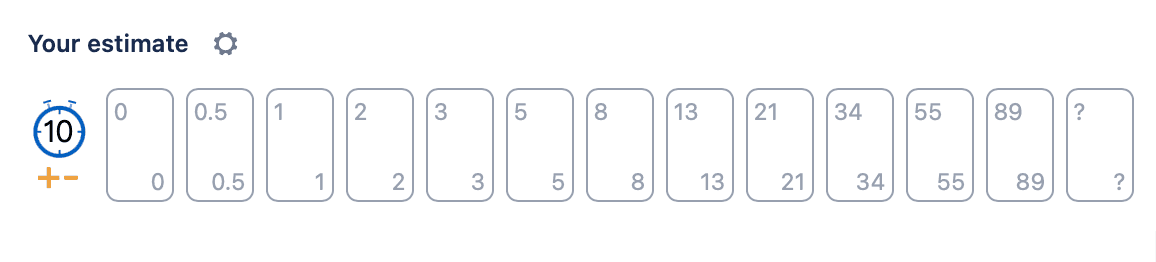
So with relative estimation you are always comparing the item you want to estimate, the cherry 🍒 in this case, with other items you have already estimated and asking if it is the same size as the strawberry 🍓, the apple 🍏 or watermelon 🍉?
'A unitless scale', what does that mean?
Unlike the meter scale, where 1 meter is defined as one ten-millionth the distance from the equator to the North Pole, a unitless scale does not correspond to a fixed, universally defined quantity.
This means:
one story point for one team is likely not the same as one story point for other teams.
So if someone is trying to compare teams based on story points completed per sprint, then feel free to share this article 😉
Estimates gain value with predictability.
Explore more in the Series
- Why Agile Teams Use Story Points Instead of Hours for Estimation
- Current Post: What are Story Points? Understanding Story Points for Agile Estimation & Planning
- What is Agile Velocity? A Guide to Estimation & Sprint Planning
- Converting Story Points to Hours: A Practical Guide for Agile Teams
- Who Should Estimate Story Points? Understanding Agile Best Practices
- How to Add Story Points in Jira
- How to Run your first Planning Poker session in Jira
How do story points translate to time?
We still need to answer how story points translate to time. In the next post, What is agile velocity, we will answer this question by introducing the concept of velocity.
Share with a friend









Explore More Ways to Improve Delivery
Flow Intelligence
See what's unpredictable. Understand why. Fix it. AI-guided insights help you spot bottlenecks, reduce variation, and make estimates that actually hold up.
Predictive Planning Poker
Estimate smarter together. Real-time collaboration meets historical data. AI-powered insights help your team calibrate estimates based on what actually happened, not just gut feeling.
